
Top-Rated Endoscopic Spine Surgery

At ESINY, we use the most advanced endoscopic techniques to make your spine surgery as precise and minimal as possible - helping you potentially heal faster, feel stronger, and reclaim the life you deserve.


WORLD CLASS CARE

Recognized Among the World's Leading Endoscopic Spine Specialists

Your Precise, Powerful Solution From The Spine Experts

Your spine treatment should be nothing short of the best. Our internationally recognized, award-winning team of neurosurgeons and orthopedic surgeons brings decades of experience in endoscopic spine treatment. They've presented at over 500 conferences, including the North American Spine Society and the Society for Minimally Invasive Spine Surgery, published more than 300 publications in peer-reviewed medical journals, and earned honors such as Honorary Member of the American Academy of Neurological and Orthopedic Surgeons—giving you precision medicine backed by unparalleled expertise.

CONTACT US

What Is Endoscopic Spine Surgery?

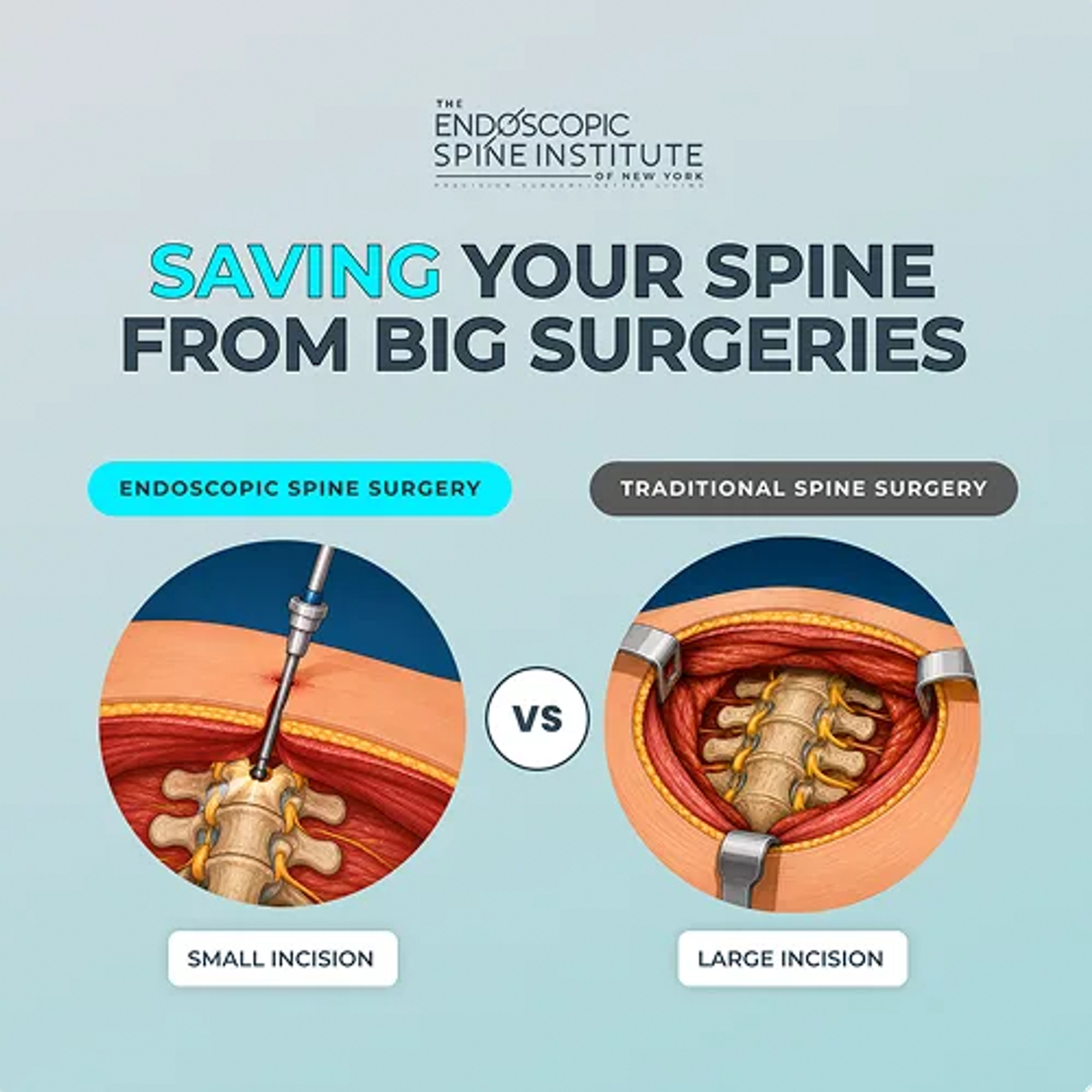
Endoscopic spine surgery is the least invasive spinal procedure available today that still involves an incision.

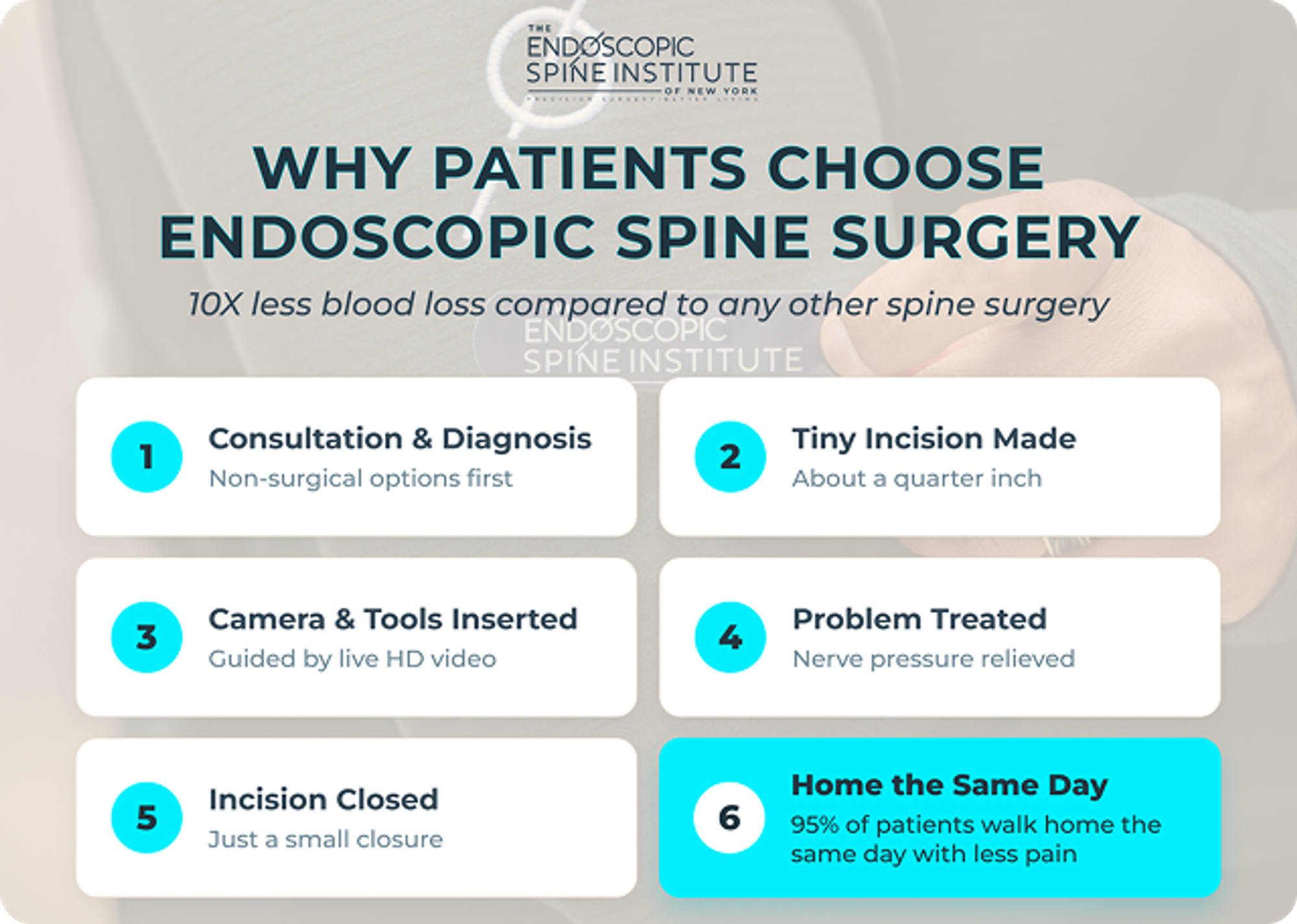
Your surgeon creates an opening under one centimeter and passes a working channel roughly the width of a drinking straw down to the affected level. A high-definition endoscope travels through that channel, projecting a magnified, brightly lit view of your anatomy onto a screen. Fine instruments pass alongside the camera to remove whatever is compressing the nerve — a fragment of herniated disc, a bone spur, a thickened ligament. The decisive difference isn't the size of the incision. It's what happens beneath it. Open surgery requires cutting and retracting the muscles that stabilize your spine, and that trauma accounts for much of the pain and disability that follow. An endoscopic approach navigates between those muscle fibers instead of through them. The muscle stays intact, the spine's stability is preserved, and the body has dramatically less collateral damage to repair.

That's why same-day discharge is routine rather than remarkable.

What Is Endoscopic Spine Surgery?

Conditions We Treat

A full range of spinal conditions, treated endoscopically.

OUR TEAM

Meet Your Team

ESINY is the leader in endoscopic spine treatment. Our award-winning team provides care that targets the source of your symptoms with far greater precision, potentially longer-lasting results, fewer side effects, and a recovery that’s often faster than traditional surgery or injections.

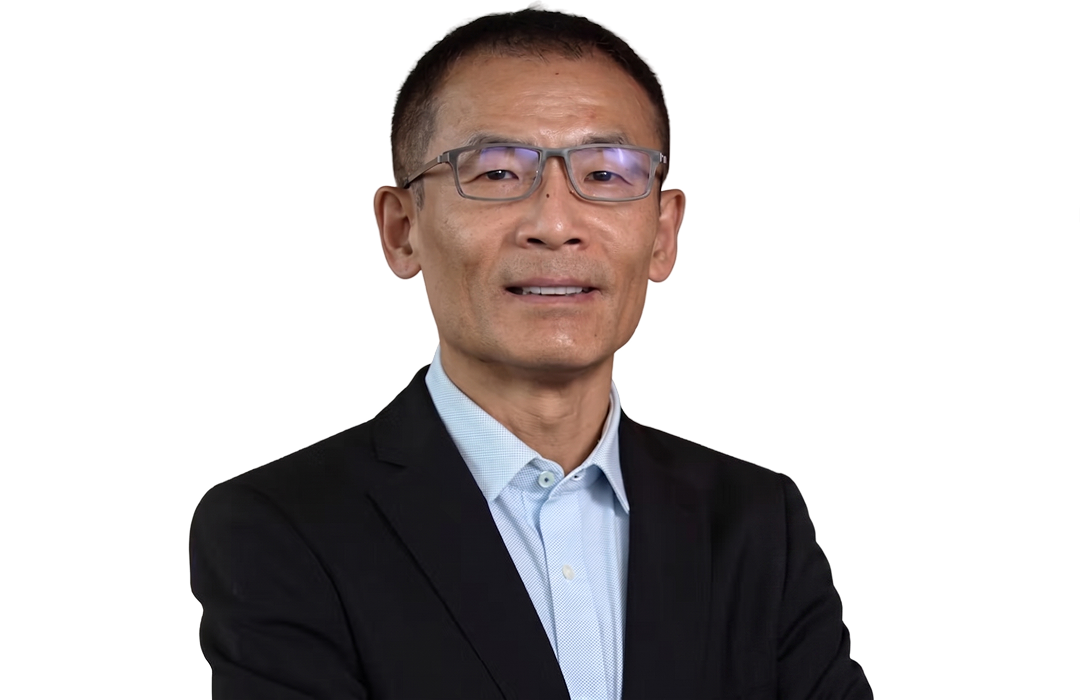
Jian Shen

Jian Shen MD, PhD

Orthopedic Surgeon

Fellowship-trained, board-certified spine surgeon and world-renowned leader in endoscopic spine surgery and disc regeneration, Dr. Shen has performed over 6,500 minimally invasive spine surgeries — including more than 5,000 endoscopic procedures — more than any other neurosurgeon in the Western Hemisphere. He is the recipient of the 2019 Parviz Kambin Award, the most prestigious honor in endoscopic spine surgery, and holds 175+ five-star reviews on Healthgrades.

VIEW FULL BIO →
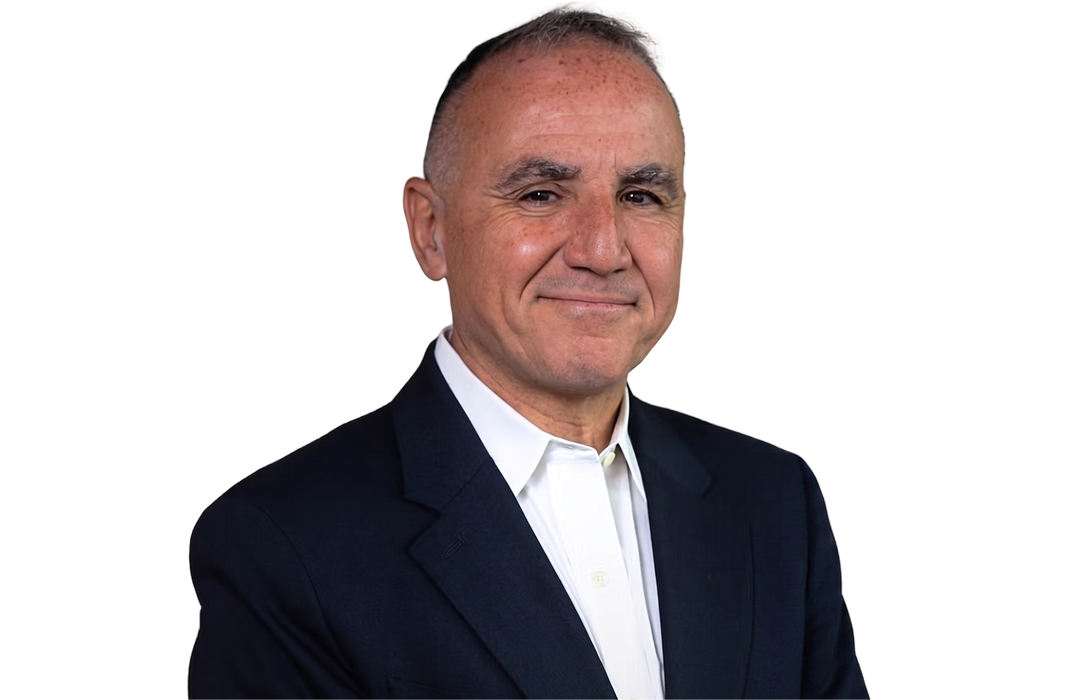

Albert Telfeian

Albert E. Telfeian MD, PhD

Neurosurgeon

Board-certified neurosurgeon and internationally recognized pioneer in endoscopic spine surgery, Dr. Telfeian is a Castle Connolly Top Doctor (since 2013), named "Best Doctor" by U.S. News & World Report and one of "15 Leaders in Neurosurgery" by Newsweek. He is ranked Top 10 in the world by Expertscape for lumbar radiculopathy, intervertebral disc displacement, and diskectomy, and is the most published endoscopic spine surgeon in the Western Hemisphere.

VIEW FULL BIO→
Sanjay Konakondla

Sanjay Konakondla MD, FAANS

Neurosurgeon

Board-certified, fellowship-trained neurosurgeon and founding partner of ESINY, he serves as Clinical Associate Professor of Neurosurgery at NYU Grossman School of Medicine and NYU Langone Health. He has authored over 60 peer-reviewed publications and holds a U.S. patent for a novel endoscopic surgical device. He is also a Diplomate of the American Board of Neurological Surgery and a Fellow of the American Association of Neurological Surgeons.

VIEW FULL BIO →
Travis Hill

Travis Hill MD, PhD

Orthopedic Surgeon

Fellowship-trained spine surgeon specializing in ultra-minimally invasive endoscopic spine surgery, he performed the first endoscopic spine procedures at NYC's Bellevue Hospital and Manhattan VA. He earned his Ph.D. at UC Davis, completed his MD and neurosurgical residency at NYU Langone, and trained in Complex & Minimally Invasive Spine Surgery at the University of Washington.

VIEW FULL BIO →
UNDERSTAND YOUR MRI

Don't Wait for Answers.
Understand your MRI today.

Upload your MRI report and get a clearer picture of what it means — before your first consultation.

** For education purposes only - not a substitute for a full evaluation by one of our surgeons.

Esiny images

What To Expect

During your consultation, we listen to your concerns and ask questions about your symptoms. We'll also discuss any previous treatments you might have tried. If you're found to be a candidate, we'll talk through what you can expect from the treatment.

Endoscopic spine treatment is the most minimally invasive spinal treatment (using an incision) that exists today. As a result, recovery is often much faster than traditional surgery and has far fewer side effects. Most of our patients only need a local anesthetic and are able to go home the same day of their procedure.

In the week following your treatment, your ESINY doctor will personally follow up with you to check on your progress and answer any questions.

What To Expect

Hear from Our Patients

Spine surgery doesn't have to be scary

Hear from real people and see what steps they took to live a pain free life.

NEED HELP?

Frequently Asked Questions

It's the least invasive spinal procedure available that still involves an incision. Your surgeon works through an opening under one centimeter, using a high-definition camera and specialized instruments to remove whatever is compressing your nerve — while passing between the spine's stabilizing muscles rather than cutting through them. The Endoscopic Spine Institute of New York is proud to be the only dedicated endoscopic spine institute in America.

Open surgery requires a three-to-six-inch incision and detachment of the muscles supporting your spine. That trauma, not the disc problem itself, accounts for much of the recovery. Endoscopic surgery reaches the same target while leaving that musculature intact.

Every spinal procedure carries risk. Endoscopic technique reduces several of them — less blood loss, lower infection risk, less muscle disruption, and frequently no general anesthesia. Real risks remain, including nerve irritation, incomplete decompression, and recurrent herniation. Your surgeon should discuss all of them with you before you decide.

Ask how many endoscopic cases they perform annually at the level you need treated, whether endoscopic technique was part of their formal fellowship, whether they publish peer-reviewed research, and whether they teach the procedure. Then ask about their complications. The answers will tell you a great deal.

Frequently not. Many endoscopic procedures are performed under local anesthesia with light sedation. General anesthesia remains available and is used when a case requires it.

Most patients go home the same day and resume light activity immediately. Full recovery depends on the procedure, the level treated, and your starting condition — but is commonly weeks shorter than recovery from open surgery.

Herniated discs, spinal stenosis, sciatica, cervical radiculopathy, degenerative disc disease, foraminal stenosis, thoracic disc herniation, and certain cases of recurrent herniation or scar tissue after previous surgery.

Most patients report significantly less post-operative pain than they expected, largely because the muscle around the spine is never cut. Discomfort at the incision site is typically brief and mild.

Under one centimeter — closed with a single adhesive bandage. Most patients find it difficult to locate after a few months.

The learning curve is steep and relatively few surgeons in the United States have committed to mastering it. Many of our patients learn endoscopic surgery is an option only after seeking a second opinion on a recommendation for open surgery or fusion.

That depends on your imaging, your symptoms, and your history — not on what you've read online. Submitting your MRI is the fastest way to find out.

For the conditions where it's appropriate, the surgical objective is identical: decompress the nerve. What differs is how much healthy tissue is disturbed reaching it. Candidacy is what matters most — the right procedure for your anatomy will always outperform the least invasive one available.

Both are performed through a small entry point, often with local anesthesia and sedation, and both send you home the same day. The difference is durability: an injection reduces inflammation temporarily, while endoscopic surgery removes the structure causing the compression.

You Deserve to Know Your Options

Your path to reclaiming your life starts here.

Find out why endoscopic spine surgery is right for you

Contact Us
Call Us