
Endoscopic Cervical Surgery: The Most Logical First Option to Total Disc Replacement Surgery

You’ve been told you need total disc replacement surgery for your neck pain, arm symptoms, or nerve compression. That recommendation is common, and in many cases, it’s made with good intentions. But before committing to disc replacement, there’s an important question most patients never get the chance to ask: Is the problem truly the disc itself—or is it a smaller, focal source of compression that could be treated without replacing the disc at all?

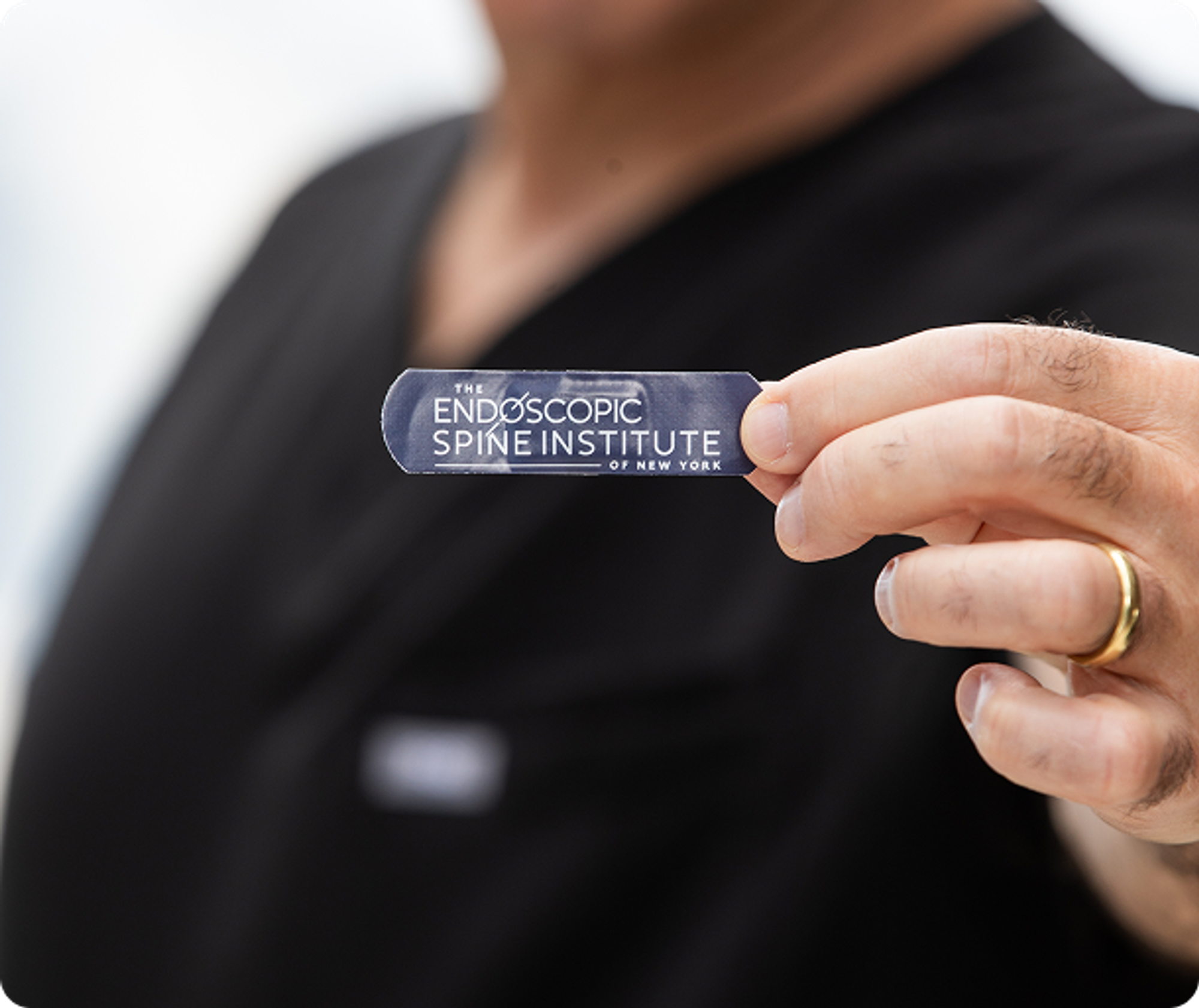
At the Endoscopic Spine Institute of New York, our award-winning team treats many cervical spine conditions using the most advanced minimally invasive techniques available. We use an incision smaller than 1 cm and image-guided endoscopic precision to relieve nerve compression while preserving stability and motion whenever possible. Most patients go home the same day with minimal discomfort and a simple band-aid.
Why is Total Disc Replacement (TDR) Recommended?

Total Disc Replacement is often recommended for patients with neck pain, arm pain, numbness, or weakness when the cervical disc itself is believed to be the primary source of symptoms. It was developed as an alternative to fusion for patients who want to preserve motion at the affected level. TDR is commonly considered for:
  • Cervical disc degeneration
  • Disc-related nerve compression
  • Single-level cervical disc disease
  • Patients with preserved spinal alignment
  • Individuals without significant instability

By removing the disc and placing an artificial disc, TDR aims to relieve pressure while maintaining motion between the vertebrae. When the disc is structurally damaged and contributing to instability or collapse, disc replacement can be an appropriate solution.

However, not all symptoms attributed to the disc actually require disc removal. In many cases, pain and neurologic symptoms come from a localized area of compression rather than failure of the entire disc.

What About Cervical Fusion (ACDF)?

Anterior Cervical Discectomy and Fusion has been performed for decades and remains a reliable operation when spinal stability is compromised. It is often recommended for patients with advanced degeneration, deformity, or multilevel disease.

Fusion works by removing the disc and permanently stabilizing the segment, eliminating motion at that level. This approach can be effective when instability is the root problem.

That said, fusion also permanently alters spinal mechanics. It requires implants and results in loss of motion at the treated level. Like disc replacement, it addresses the entire disc space, even when symptoms stem from a smaller, focal source of compression.

For patients with preserved stability and isolated nerve compression, fusion may be more surgery than necessary.

What About Cervical Fusion (ACDF)?

The Option Many Patients Aren’t Told About: Endoscopic Cervical Decompression

In many patients, symptoms do not come from spinal instability. They come from a specific point of pressure, such as:
  • Disc herniation
  • Bone spurs
  • Spinal cord compression
  • Disc osteophyte complex
  • Nerve root compression
  • Arthritis

Endoscopic cervical decompression allows us to address the exact source of compression while preserving the disc, motion, and surrounding structures. For properly selected patients, this approach can relieve symptoms without fusion or implants.

The Option Many Patients Aren’t Told About: Endoscopic Cervical Decompression

Your Path to Relief with Endoscopic Cervical Treatment

Endoscopic cervical treatment focuses on precision. Rather than restructuring the spine, we remove only what is compressing the nerve or spinal cord.

Lowest Risk Profile with a Tissue-Sparing Approach

Our endoscopic technique minimizes disruption to muscles, ligaments, and bone. Compared to traditional open cervical surgery, this approach is associated with an infection rate of just 0.001% and approximately ten times less blood loss, while still achieving strong clinical outcomes.

Lowest Risk Profile with a Tissue-Sparing Approach

Minimally Invasive to Support a Smoother Recovery

Traditional cervical surgeries often involve extensive tissue exposure to reach the spine. With endoscopic surgery, we access the problem area through a very small incision (less than 1 cm) using a high-definition camera. This often results in less postoperative pain, minimal scarring, and a quicker return to daily activity.

Minimally Invasive to Support a Smoother Recovery

95% Walk Out the Same Day—With Less Pain

The majority of patients walk out the same day and begin gentle movement shortly after surgery. In many cases, there is no hospital stay and no prolonged recovery associated with large anterior exposures or implanted disc devices. By avoiding permanent implants when they are not necessary, recovery often feels more straightforward and less disruptive.

95% Walk Out the Same Day—With Less Pain

Reduced Need for General Anesthesia

Some endoscopic cervical procedures can be performed using local anesthesia with light sedation. While general anesthesia is sometimes still appropriate, avoiding it when possible can reduce recovery time and postoperative side effects.

Reduced Need for General Anesthesia

Precision Treatment For Cervical Spine Symptoms

Our endoscopic treatment is designed to address:

  • Neck pain
  • Arm pain or radiating nerve pain
  • Numbness or tingling in the arms or hands
  • Weakness in the arms or grip
  • Shoulder or upper back pain
  • Symptoms related to nerve root compression
  • Early signs of spinal cord compression
  • Loss of fine motor control
  • Balance changes related to cervical compression

When Total Disc Replacement or Fusion is Still the Right Answer

We are very clear and direct with our patients. Some cervical spine conditions do require disc replacement or fusion. This includes cases involving:
  • True spinal instability
  • Significant deformity
  • Multilevel collapse
  • Advanced cervical myelopathy
  • Failed prior decompression surgeries

If a total disc replacement is the most appropriate treatment, we will tell you. Our focus is not on avoiding a disc replacement; it is on avoiding unnecessary procedures.

When Total Disc Replacement or Fusion is Still the Right Answer

Meet ESINY

Meet Your Team Transforming the World of Spine Surgery

ESINY leads the way in endoscopic spine treatment. Our award-winning doctors focus on treating the exact source of your symptoms with exceptional precision, potentially longer-lasting results, fewer side effects, and recoveries often faster than traditional surgery or injections.

With decades of combined experience, our internationally recognized team has presented at more than 500 conferences — including the North American Spine Society and the Society for Minimally Invasive Spine Surgery — and published over 300 papers in peer-reviewed medical journals. They’ve also earned honors such as Honorary Member of the American Academy of Neurological and Orthopedic Surgeons, giving you access to precision medicine supported by unmatched expertise.

What To Expect

Many people come to ESINY after hearing that surgery is their only remaining option. During your visit, we take time to review your imaging together and explain what it actually shows, so you understand where your symptoms are coming from.

We look closely at your history, prior treatments, and imaging to determine whether your condition is driven by instability or by a specific point of compression. That distinction matters, because it guides the type of surgery that makes the most sense.

If endoscopic cervical surgery is an option, we walk you through the procedure in clear terms and explain how it differs from fusion or disc replacement. Our focus stays on precision, motion preservation, and long-term spinal function.

After your procedure, your ESINY surgeon checks in personally to monitor your recovery and answer questions, so you are supported through each stage of healing.

What To Expect
Candidate Icon

Are You a Candidate?

You may be a candidate for endoscopic cervical surgery if your symptoms come from nerve compression rather than spinal instability.

This approach may be appropriate if you have:

  • Arm pain or numbness caused by nerve compression
  • A cervical disc herniation
  • Foraminal stenosis
  • Bone spur-related radiculopathy
  • No severe instability

Many patients told they “need disc replacement” have never been evaluated for a compression-focused, motion-preserving option.

At ESINY, every case is evaluated individually. If fusion or disc replacement is the better solution, we will tell you. If a smaller approach can solve the problem, we will explain that as well.

Join the 30,000+ Patients Who Have Found Relief

CONTACT US

Schedule a Total Disc Replacement Consultation

Before committing to disc replacement or cervical fusion, it is worth asking one essential question: Is the problem instability, or is it compression?

If compression is the cause, a less disruptive solution may exist. Schedule a consultation with ESINY to explore all of your options.

Schedule a Total Disc Replacement Consultation

Endoscopic Spine Surgery

Frequently Asked Questions

Endoscopic decompression focuses on relieving nerve pressure without removing the entire cervical disc. In patients whose symptoms are caused by focal compression rather than advanced degenerative disc disease, this approach can potentially reduce pain while preserving normal motion within the cervical spine. Many people recover more quickly compared to disc replacement procedures that restructure the disc space.

For properly selected patients, endoscopic decompression can carry a lower overall risk than artificial disc replacement surgery. It avoids placing an artificial disc, limits tissue disruption, and reduces exposure compared to traditional spine surgery. Safety depends on anatomy and the surgeon's experience, which is why careful evaluation is important.

Some endoscopic procedures can be performed using local anesthesia with light sedation, depending on the case. General anesthesia is still available when appropriate.

95% of patients go home the same day and begin gentle movement shortly after surgery. When symptoms come from a herniated disc or localized nerve compression, improvement can happen quickly. Recovery is often shorter than with total disc replacement or spinal fusion, which require healing around implants.

Some patients benefit from short-term physical therapy to restore strength and mobility, while others return to normal activity without formal rehabilitation. Because minimally invasive spine surgery preserves motion and avoids new bone formation around implants, recovery can feel more natural than after disc replacement.

Cervical disc replacement and total disc replacement surgery remove the disc and place an artificial device between the vertebrae. That means a foreign body remains in the spine and must be monitored over time.

Endoscopic decompression takes a very different approach. It relieves nerve compression without removing the disc or placing any implants. Because no foreign device is left behind, the procedure focuses on resolving the source of pain while preserving the spine’s natural structure.

You Deserve to Know Your Options

Your path to reclaiming your life starts here.

Find out why endoscopic spine surgery is right for you

Contact Us