


Minimally invasive lumbar decompression is not one single procedure. It covers an outpatient, needle-based treatment for a specific type of spinal stenosis, and it also covers true endoscopic decompression surgery. The right one depends on exactly what is pressing on the nerve.
If you have been told you need decompression, or you already tried a minimally invasive procedure and the relief did not last, this guide explains what each approach treats, who performs it, and how to tell which one fits your situation.
Key Insights
- "Minimally invasive lumbar decompression" is a category, not a single procedure. It includes a needle-based option and true surgical decompression.
- The mild procedure only treats spinal stenosis caused by ligament thickening. It cannot reach a herniated disc, bone spur, or narrowed nerve opening.
- Endoscopic decompression surgery is built for those broader causes and is performed by spine surgeons, not pain management physicians.
- Five-year data shows 93.1% of mild patients avoided further decompression or fusion (Deer et al., 2026). Endoscopic decompression carries a 0.2% 90-day reoperation rate versus 1.8% for open surgery (Srinivas et al., 2026).
- The right option depends on what is actually compressing the nerve, not on which procedure you heard about first.
What Is Minimally Invasive Lumbar Decompression?
Minimally invasive lumbar decompression is any procedure that relieves pressure on a compressed spinal nerve in the low back through a small opening. It does this without the muscle stripping, blood loss, or extended hospital stay of traditional open spine surgery. That definition covers more ground than most people expect.
It includes the mild procedure, done through a needle-sized opening for one specific cause of spinal stenosis. It also includes endoscopic decompression surgery, done through a small tubular incision to treat disc herniations, bone spurs, and narrowed nerve openings as well as stenosis. Both are genuinely minimally invasive, but they are not interchangeable, and knowing the difference is what determines which one can actually help you.
What's Actually Compressing the Nerve, and Why It Determines Your Options
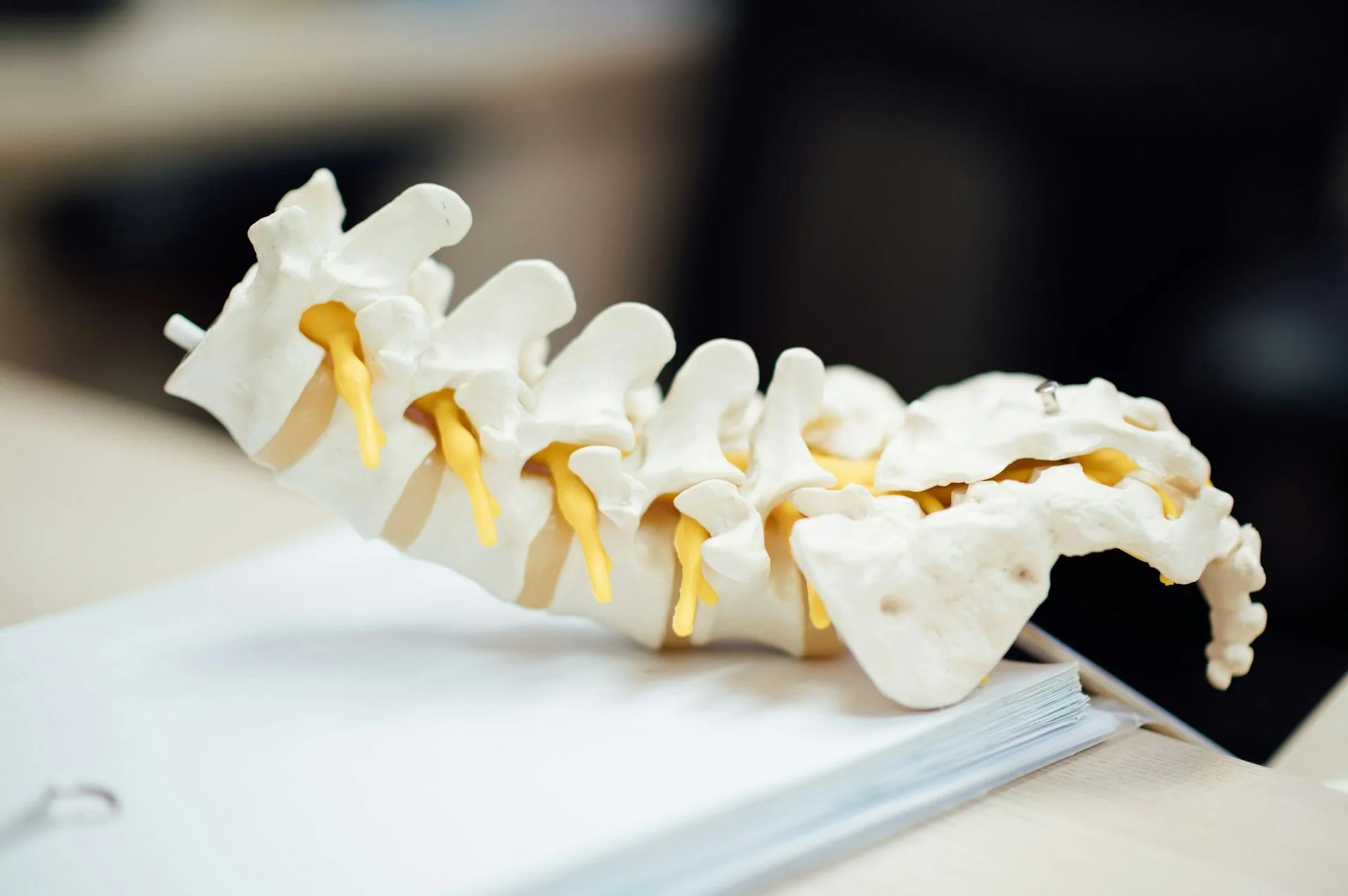
Low back and leg pain from nerve compression can come from more than one source, and the source is what decides your treatment path. A thickened ligament, called the ligamentum flavum, narrowing the spinal canal is one cause. A herniated or bulging disc pressing on a nerve root is another, often showing up as lumbar radiculopathy.
Bone spurs or a narrowed opening where the nerve exits the spine, known as foraminal stenosis, is a third cause. It is frequently part of degenerative disc disease. The mild procedure addresses only the first of these.
It removes ligament tissue and does not touch a disc, a bone spur, or a narrowed foramen. When a disc, bone spur, or foraminal narrowing is part of the picture, endoscopic decompression is built to reach it directly.
The Percutaneous Option: The MILD Procedure
The mild procedure (the name stands for Minimally Invasive Lumbar Decompression, as the device manufacturer named it) is usually performed by pain management physicians rather than surgeons. It uses local anesthesia with light sedation and X-ray guidance, working through an opening about the size of a pencil tip. Small instruments remove a portion of the thickened ligament narrowing the spinal canal, and most patients go home the same day.
It is built specifically for lumbar spinal stenosis caused by ligamentum flavum thickening. In a five-year randomized controlled trial published in Interventional Pain Medicine, patients who had the mild procedure alongside conservative care saw their disability scores improve by an average of 20.6 points and their leg pain scores drop by 4.6 points. 93.1% avoided a decompression or fusion surgery over the following five years (Deer et al., 2026).
Johns Hopkins Medicine reports that patients typically go from standing for about 8 minutes at a time to about 56 minutes, and from walking about 246 feet to nearly 4,000 feet. Roughly 12% still need a spine decompression surgery within five years.
Patients tend to be good candidates for the mild procedure when:
- Imaging confirms central stenosis from ligamentum flavum thickening, not primarily a disc or bone spur issue.
- Symptoms match neurogenic claudication: leg pain, cramping, or numbness that worsens with standing or walking and eases when sitting or leaning forward.
- Conservative care has not given lasting relief, including physical therapy, medication, or injections.
- General anesthesia is something you would rather avoid. The mild procedure uses local anesthesia and light sedation only.
The Surgical Option: Endoscopic Lumbar Decompression
When the compression comes from something the mild procedure cannot reach, a herniated disc, a bone spur, or a narrowed nerve opening, decompression surgery is the option built to address it. Endoscopic decompression uses a tube about the width of a pencil and a high-definition camera to remove the exact tissue pressing on the nerve. That can be disc material, bone, or ligament, while the rest of the spine's supporting structure stays intact.
Unlike the mild procedure, it is performed by spine surgeons under direct visualization. It can treat conditions the mild procedure is not built for, including sciatica, lumbar radiculopathy, and foraminal stenosis from degenerative disc disease.
ESINY's surgeons practice endoscopic spine surgery exclusively, rather than as one offering among several. The group has operated on roughly 50 fellow spine surgeons who chose ESINY for their own care.
In a peer-reviewed outcomes study co-authored by ESINY's own Dr. Sanjay Konakondla and Dr. Albert Telfeian, published in the International Journal of Spine Surgery, 89.2% of patients reported better outcomes than they had experienced with traditional spine surgery. 98% said they would recommend the procedure, and 78.7% of those who were working before surgery had returned to work (Telfeian et al., 2025).
MILD vs. Endoscopic Decompression: Side by Side
Both are worth knowing about before you commit to either one. Here is how they compare on the factors patients ask about most:
Factor | MILD Procedure | Endoscopic Decompression |
|---|---|---|
Who performs it | Pain management physician | Spine surgeon |
What it treats | Central stenosis from ligamentum flavum thickening only | Disc herniation, bone spurs, foraminal stenosis, and central stenosis |
Incision | Needle-sized opening | Small tubular incision, under 1 cm |
Anesthesia | Local anesthesia with light sedation | Sedation or general anesthesia, depending on the case |
Same-day discharge | Yes, in most cases | Yes; ESINY reports a 95% same-day discharge rate |
Longer-term outcome data | 93.1% avoided further decompression or fusion at 5 years (Deer et al., 2026) | 0.2% required reoperation within 90 days, versus 1.8% after open surgery (Srinivas et al., 2026) |
Neither procedure is an upgrade or a downgrade from the other. They are built for different problems. Many patients who are told they are not candidates for the mild procedure, because a disc or bone spur is involved, turn out to be good candidates for endoscopic decompression instead.
Are You a Candidate for Minimally Invasive Decompression?
- You have been living with back, leg, or neck pain and have put off surgery out of fear. Both procedures discussed here are outpatient and far less invasive than a traditional open operation.
- You were told spinal fusion is your only option. Many patients in this position have a source of compression that endoscopic decompression can reach without fusing anything.
- You already had a fusion and still have pain. A revision procedure after a failed spine surgery is sometimes a smaller operation than patients expect.
- Imaging shows a herniated disc, bone spur, or narrowed foramen. This points toward endoscopic decompression rather than the mild procedure.
- Imaging shows central stenosis from ligament thickening alone, with no disc or bony involvement. This is the specific problem the mild procedure was designed to solve.
The only way to know for certain which category you fall into is to have your imaging and symptoms reviewed by a specialist. If your case involves anything beyond ligament thickening alone, that review should include a surgeon who performs endoscopic decompression, not only a mild provider.
What to Expect After Decompression
Recovery differs by procedure and by what was actually removed. Most mild patients return to light activity within days. Endoscopic decompression patients typically go home the same day, and ESINY reports a 95% same-day discharge rate.
Many patients return to work up to 10 days sooner than those who have traditional open surgery. For a full week-by-week breakdown of recovery after endoscopic decompression, see Minimally Invasive Spine Surgery Recovery.
Why Patients Travel to ESINY for Endoscopic Decompression
ESINY is not a general spine practice that also happens to do endoscopic work. It is the only U.S. institute built entirely around endoscopic spine surgery. That focus is a large part of why other spine surgeons refer their own patients here, and sometimes come here themselves.
New patients get a full hour with their surgeon before any treatment plan is discussed. After surgery, patients get a personal phone call from their surgical team the day after, and direct email access to their physician. For a closer look at how these outcomes compare across procedures, see Endoscopic Surgery Success Rates Explained.
If imaging has already labeled you a candidate for one procedure and you would like a second opinion on whether it is actually the right fit, reach out. ESINY's surgeons regularly review cases from patients who found this page after a mild procedure, a fusion recommendation, or a recovery that stalled. Contact ESINY to have your imaging reviewed.
FAQs About Minimally Invasive Lumbar Decompression

Is minimally invasive lumbar decompression the same as the mild procedure?
Not always. Minimally invasive lumbar decompression is the broader category, and the mild procedure is one specific technique within it, performed by pain management physicians for one cause of spinal stenosis. Endoscopic decompression surgery is a separate, broader technique performed by spine surgeons for disc herniations, bone spurs, and stenosis.
How long does recovery take after minimally invasive lumbar decompression?
It depends on which procedure. Mild patients often resume light activity within days. Endoscopic decompression patients typically go home the same day and return to desk work within one to two weeks, though recovery timelines vary by case.
See our full recovery guide for a week-by-week breakdown.
Can minimally invasive lumbar decompression treat a herniated disc?
The mild procedure cannot. It only removes thickened ligament tissue and was not designed to reach disc material. Endoscopic decompression can, since it is performed under direct visualization and can remove disc material pressing on a nerve root along with any bone spurs or ligament involved.
Is minimally invasive lumbar decompression permanent?
Results vary by procedure and by what caused the compression. Five-year data on the mild procedure shows most patients avoid further surgery. Endoscopic decompression removes the compressing tissue directly, though degeneration elsewhere in the spine can still develop over time regardless of which procedure a patient has.
Who performs minimally invasive lumbar decompression?
The mild procedure is usually performed by pain management physicians. Endoscopic decompression is a surgical procedure performed by spine surgeons. At ESINY, every surgeon practices endoscopic spine surgery exclusively, rather than as one offering among many.
What if I already tried a minimally invasive procedure and I'm still in pain?
Ongoing pain after a mild procedure or another minimally invasive treatment does not necessarily mean the next step has to be a fusion. Endoscopic decompression is designed to address sources of compression that an earlier, narrower procedure was not built to reach.